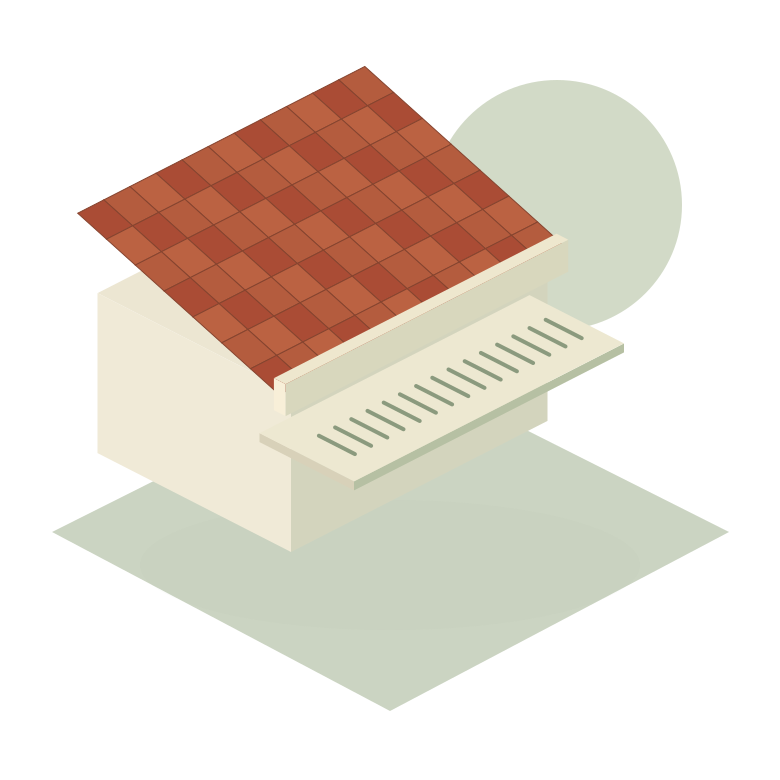
Signs the fascia needs assessment
Visible deterioration, movement or gutter brackets pulling away can indicate a fascia problem. The appearance alone does not establish how much material needs replacing. Note the affected elevation and whether the gutter or neighbouring boards have moved too.
Check behind the visible board
Moisture damage can extend behind the visible fascia to supporting timber. Assessment should address the cause and the fixing surface. A new outer covering cannot make rotten or unsuitable support sound, even if the finished edge looks tidy.
Compare repair and replacement options
Local repair, replacement and overcladding are different scopes. Material and appearance should suit the building, while any retained support must be suitable. Ask why the proposed approach is appropriate and what condition checks it relies on.
Coordinate adjoining components
Gutters may need removal and refitting, and the junction with soffits needs care. Decide whether those components are retained, repaired or renewed. Include access and any making good in the quotation so the complete edge detail is understood.
Prepare a fascia enquiry
Share photographs of the affected edge and describe leakage or previous patching. Explain any appearance preferences and planned gutter work. Ask the proposal to state how hidden deterioration will be handled if it becomes visible during the work.
Your questions, answered.
Can new fascia boards cover rotten timber?+
A new finish should not conceal unsound support. Underlying condition must be assessed and defects addressed.
Does fascia replacement include new gutters?+
Only if included in the scope. Existing gutters may be retained and refitted where suitable.
Can a damaged section be repaired without replacing every elevation?+
Potentially. The extent of deterioration, matching details and adjoining condition determine the sensible scope.