Recognise the downpipe problem
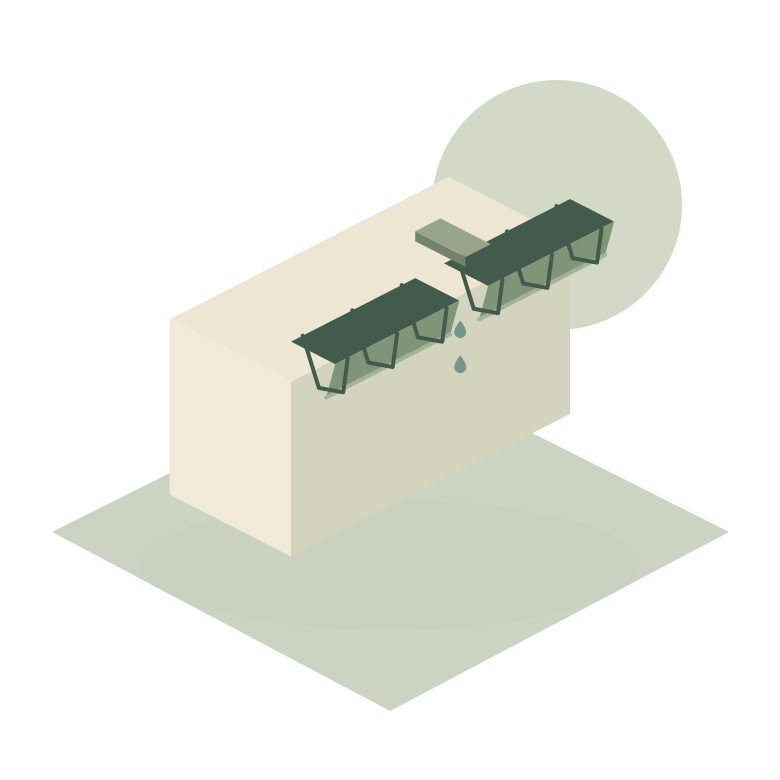
Water running down the outside of a pipe can originate at a joint or above it. Loose clips, broken sections and overflow at the gutter can also be relevant. Note the position and timing of the symptom without dismantling the pipe yourself.
Trace flow through the connected system
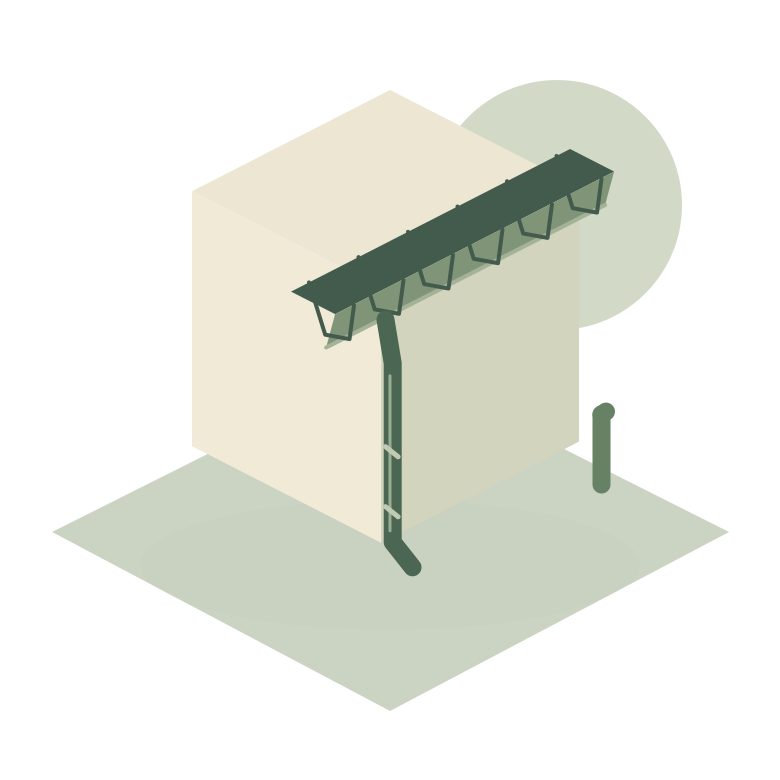
The gutter outlet, pipe route and discharge point form a connected system. A restriction can lie within the downpipe or beyond it. Establish whether the fault is part of the roof rainwater system or requires separate drainage investigation.
Repair or replace the affected components
Repair or replacement depends on condition and compatible parts. A local section may be replaceable while sound components remain. Fixings and joints should be included in the scope, along with any changes needed to make the route work properly.
Access and discharge considerations
Height, restricted elevations and shared connections affect access and responsibility. Clarify who can authorise work where neighbouring properties or communal systems are involved. Do not assume a roofing quote includes underground drainage repairs.
Prepare a downpipe enquiry
Describe leaks, overflow and any previous clearance attempts. Safe photographs showing the full route can be more useful than an isolated close-up. Identify the property contact and known restrictions before arranging an assessment.
Your questions, answered.
Could the blockage be below ground rather than in the downpipe?+
Yes. The discharge route needs checking to distinguish a downpipe issue from a separate drainage fault.
Can one damaged pipe section be replaced?+
Often that may be possible, provided suitable compatible components and sound fixings are available.
Can a downpipe fault cause the gutter above to overflow?+
Yes. A restriction can back water up into the gutter, so both parts should be considered.